
The Next Chapter of Chinese Cuisine in America | Six Industry Insights from a Private CEO Roundtable in Boston

Jason Fu
November 17, 2025
Introduction: When We Talk About Chinese Food, What Are We Really Talking About?
Opening a successful restaurant in the United States remains a high-friction endeavor: thin margins, labor volatility, and unforgiving competition. And yet, by 2025, Chinese restaurants were expanding rapidly across major U.S. cities—fueled by outbound Chinese chains and a broader re-rating of what “Chinese dining” can be in the American market.
What’s changing is not only the number of restaurants. It’s the operating logic behind them. The conversation is shifting from day-to-day survival toward brand construction, strategic scaling, and cultural translation.
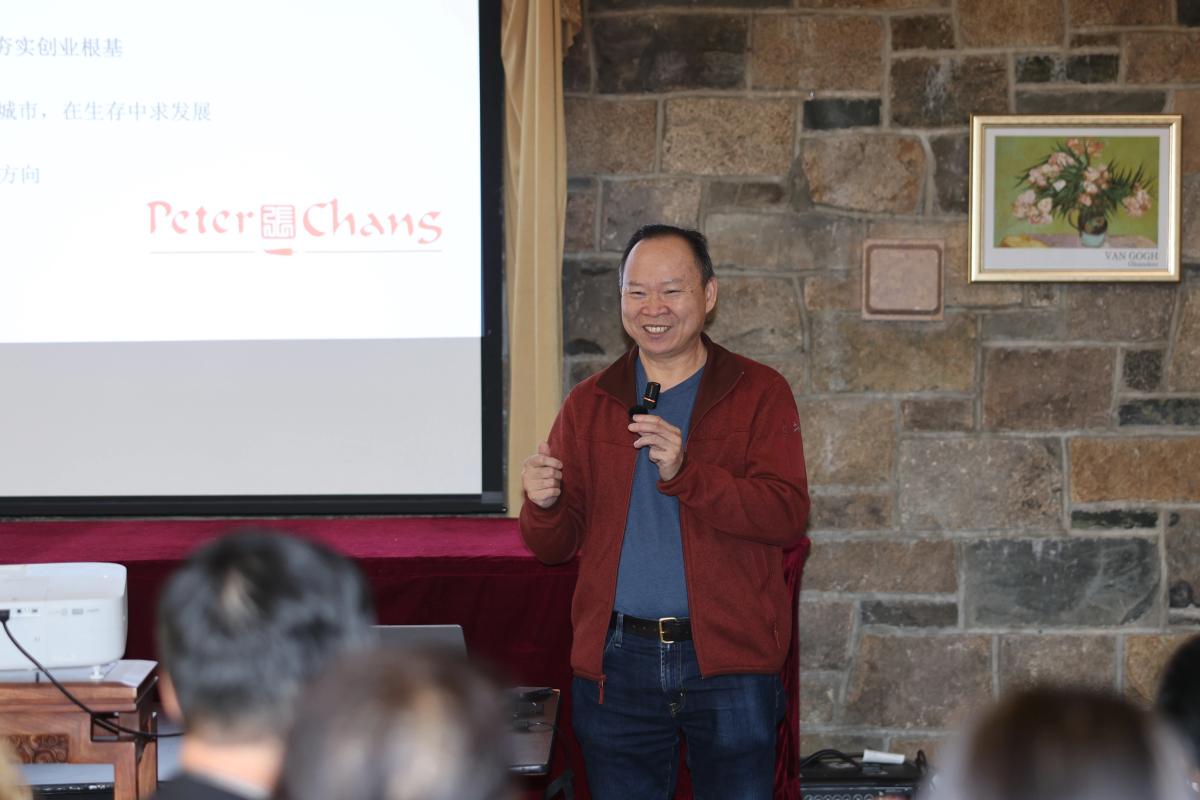
That shift was on display at a closed-door roundtable held at Boston’s historic “Castle at 99,” co-hosted by the Restaurant Entrepreneurs Club, Peter Chang, MenuSifu, and the Boston International Business School. Operators and builders gathered to compare notes on what is working, what is breaking, and what needs to be rebuilt.
This article distills six ideas from that discussion—less as “takeaways,” more as signals of an industry moving into its next phase.
1. Build on the Periphery Before You Enter the Center
Peter Chang’s rise did not begin in the most visible cities. It began in the less glamorous geography of constraints.
In the early years, limited capital and practical restrictions shaped his movement across the country—often by long-distance bus. That experience became market research in its rawest form: a ground-level read on regional tastes, price sensitivity, and what “good Chinese food” means in different contexts.
The strategic choice that followed was deliberate. Rather than fighting for attention in saturated hubs like New York or Washington, D.C., he opened in less contested markets—places where reputation could compound faster than rent, and where a team could be trained under real operating pressure without immediately drowning in overhead.
The implication is straightforward: in restaurant expansion, visibility is rarely the first step. Capability is.
2. Cost Discipline Works Best When It’s a System
Chang describes an investment mindset that is easy to dismiss as opportunistic, but is better understood as structural: avoid paying premiums to enter a business.
Instead of taking over locations with high transfer fees, he looked for distressed restaurants where landlords were motivated to reduce vacancy risk. The goal was not merely “cheap rent,” but a lower-risk path to early cash flow. In one example shared, his second restaurant required a total investment of roughly $146,000; the first recovered its cost within six months.
But the more enduring lesson wasn’t a single deal. It was the repeatable operating system behind it:
- Renovate for function, not aesthetics.
- Reuse equipment whenever possible.
- Reduce menu complexity (fewer SKUs, less waste).
- Centralize procurement where scale allows.
- Standardize workflows to reduce dependence on high-cost talent.
This is not austerity as personality. It’s cost discipline as strategic flexibility: lower fixed costs buy time, and time buys learning.
3. The Chef’s Endgame Is Not the Stove. It’s the Brand.
In mature markets, culinary excellence is necessary—but rarely sufficient. Chang’s view is that chefs who want durability must build legitimacy outside the kitchen.
That means learning how to participate in the mainstream systems that shape reputation: media, institutions, awards, and cultural narratives. Chang described multi-year participation with the James Beard Foundation ecosystem and the compounding effect of sustained coverage by major outlets.
The underlying point is not publicity for its own sake. It is brand as an asset class. Once a chef’s name becomes synonymous with reliability and quality, expansion becomes less about persuasion and more about expectation.
For Chinese cuisine in America, this step matters disproportionately: the market still often interprets Chinese food through stereotypes of price, speed, and informality. Breaking that frame requires institutional visibility—not only great dishes.
4. Innovation Must Respect the Core—But It Can Change the Form
Chen Sumiao, founder of Michelin-recommended Sketch Hunan, framed the challenge with practical clarity: the roots of Chinese cuisine are in the food itself, but growth abroad requires sensitivity to how people live.
Her solution is not to dilute cuisine, but to redesign the interface. Sketch Hunan operates in a bistro-like format (roughly 30–50 seats), with open kitchens and a bar, emphasizing steamed and health-forward dishes that align more naturally with urban American dining patterns—while still anchoring in Hunan flavor logic.
Alongside this model, other operators discussed a very different route: fast-casual formats designed for standardization—lighter kitchens, smaller teams, reduced reliance on individual chefs, and SOP-driven consistency. The promise is scalability under cost pressure.
Yet standardization reveals a hidden bottleneck: the supply chain. Consistency at scale is less about the recipe than about inputs, logistics, and quality control across distance. If Chinese cuisine wants the replicability that powered global Western fast food, it will require shared infrastructure—not only clever concepts.
5. The Future Discussion Isn’t Only AI. It’s Also Capital Design.
While automation and AI remain common talking points, one of the more forward-leaning ideas at the roundtable was financial: tokenization.
A proposal introduced by Boston International Business School leadership explored whether restaurant assets—cash flows, lease rights, and other real-world claims—could be tokenized via blockchain infrastructure and issued through USD-pegged stablecoins.
In simplified form: imagine a “brand coin” that can be used across an operator’s restaurants, redeemed through an online store, and potentially appreciated as the brand expands. It links loyalty, purchasing behavior, and capital formation into a single ecosystem.
This is early-stage thinking, and it carries real execution and regulatory complexity. But it reflects an important shift: restaurants increasingly behave like platforms, and platforms often seek financial architectures that match how they grow.
6. The Irreplaceable Constraint Is People
After all the frameworks—cost systems, brand legitimacy, standardization, supply chains, tokenization—the conversation returned to the variable that refuses to be abstracted away: people.
Reliable kitchen talent is harder to find. The lifestyle demands of hospitality are increasingly at odds with what many younger workers want. As Chen put it, restaurant work is not simply a career choice; it is a lifestyle choice—long hours, weekends, holidays, and sustained emotional labor.
This pushes every growing brand toward the same uncomfortable question: succession.
How do you build an organization that can outlive the founder’s intensity? How do you turn personal standards into institutional standards? How do you retain culture while reducing dependency on any single person?
Technology may optimize operations. Capital may accelerate expansion. But neither can replace the human systems required to sustain quality.
Conclusion: The Next Growth Cycle Will Be Structural
The Boston roundtable offered a coherent signal: Chinese cuisine in America is entering a phase where strategy matters as much as craft.
Survival tactics are giving way to design choices—how to expand, how to price risk, how to build legitimacy, how to scale consistency, how to modernize capital, and how to keep the human engine running.
If there is a next golden era, it will not be created by a single dish or a single trend. It will be created by operators who can balance three forces at once:
- Culture, without nostalgia
- Consistency, without losing soul
- Scale, without collapsing the people system that makes it possible
Source basis: original Chinese roundtable notes and write-up.